
📈 BUILDING ON PAST SUCCESS
This isn’t a radical idea. In fact, Nottingham has already shown how well this can work.
Old Market Square
In 2007, Nottingham completed a major pedestrianisation of Old Market Square, replacing vehicle traffic with a unified, visitor‑friendly granite‑paved plaza built for gatherings, markets, performances and cafés. The aim was to create a place for people inspired by European plazas, with outdoor terraces and public events and it succeeded beautifully, transforming the heart of the city all the way up as far as mid King Street. As part of the project, buses that once passed through the square, including those running past the bottom of King Street, were successfully rerouted to make way for the new pedestrian space. Given how well that worked, why let the vision stop in the middle of King Street? Let’s finish what was started and extend the same thoughtful design all the way to the top of King and Queen Streets.
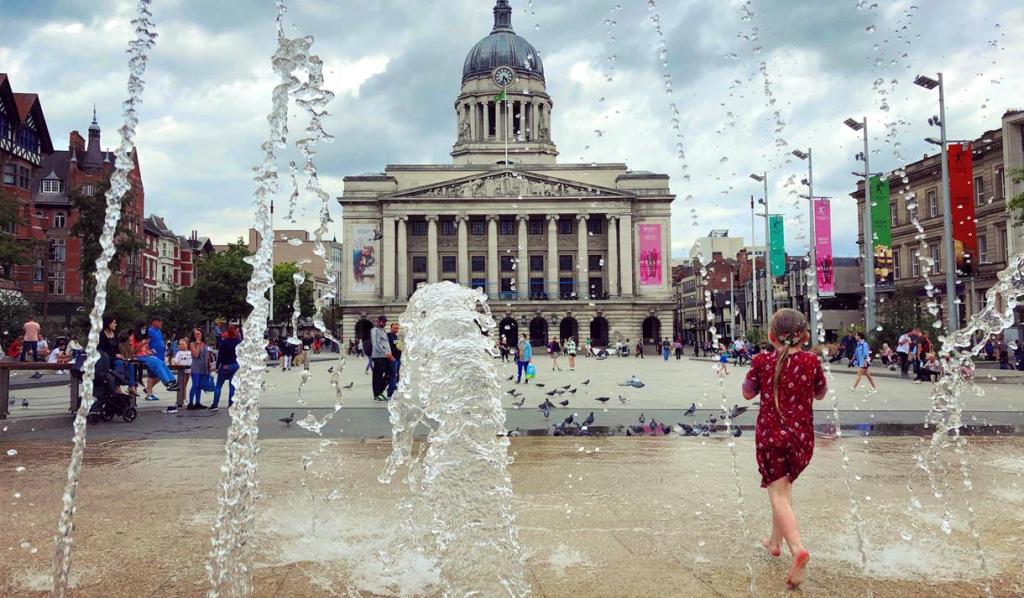
Old Market Square, Nottingham, from Visit Nottinghamshire website
Hockley
Similarly, Hockley, Nottingham’s vibrant independent quarter, has seen organic pedestrianisation and strategic closures over time.The area has evolved into a car‑free hub of independent bars, cafés, boutiques and cultural venues since the early 2000s, anchored by the Hockley Hustle music & arts festival (running annually since 2006). Reddit users frequently cite Carlton Street as a classic example: before pedestrian closure it was nearly empty, and by simply restricting vehicles and changing planning rules to allow hospitality, it transformed into a lively destination with record shops, cafés and bars.
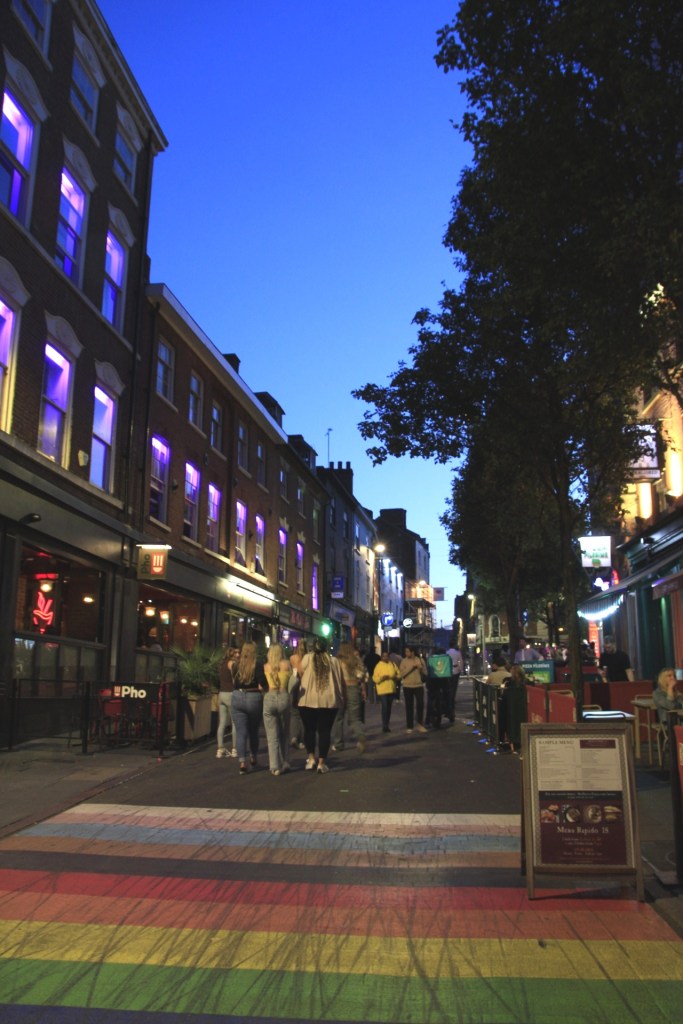
Carlton Street, Hockley, Nottingham, 2025 – Credit : @zainab.alawie.photography
Sneinton Creative Quarter
The same is true in the nearby Sneinton Creative Quarter, where streets around Sneinton Market have been redesigned to prioritise walking, cycling, and street-level culture. Once a neglected industrial zone, this part of the city has become a thriving hub for artists, makers, and local enterprise, thanks in large part to its pedestrian-friendly layout, new seating areas, market space, and an emphasis on public life rather than private vehicles. The regeneration of Sneinton shows what happens when planning supports creativity and community rather than congestion.

Sneinton Market “Creative Quarters”, Nottingham
Broad marsh
More recently, Nottingham has doubled down on this approach with even bigger ambitions. The redevelopment of the Broad Marsh area is perhaps the city’s boldest pedestrian project yet, turning the site of a former shopping centre and car park into a wide, green, people-first public space. Inspired by ideas of rewilding and urban wellbeing, the new vision includes public plazas, tree-lined walkways, space for independent business, and clear pedestrian connections between the train station, castle, and Old Market Square. It’s an ambitious reimagining of how central Nottingham should feel: open, welcoming, green, and accessible, not dominated by traffic.

Broadmarsh, Nottingham, 2025 (free to use)
Together, Old Market Square, Hockley, Broad Marsh, and Sneinton examples show that pedestrianisation in Nottingham isn’t hypothetical, it has been done, it works, and it benefits the city enormously. These projects weren’t just possible, they were transformational. So why stop now? The logical next step is to carry that same energy right to the top of King Street and Queen Street: two of the city’s most iconic central roads, with all the potential to become vibrant, walkable, and alive. And unlike the large-scale redevelopments that came before, this would be a smaller, simpler project, less expensive, quicker to deliver, and yet just as impactful. It’s a natural continuation of what Nottingham has already proven it can do, right in the very heart of the city.
🏙️ Building on Momentum
Since 2019, Nottingham City Council has been reshaping the southern city centre through its ambitious Southside Regeneration Plan, creating cleaner, greener streets that put people before cars. Major projects like the Broad Marsh redevelopment, improvements to Angel Row, and the transformation of Maid Marian Way show a clear commitment to prioritising pedestrians, cyclists and local communities.
With more than £12 million secured from the Future High Streets Fund, the Council is already investing in high-quality public realm on streets like Maid Marian Way and Angel Row, creating wider pavements, cycle lanes, greener spaces and safer crossings, with completion expected in 2025.
Pedestrianising King Street and Queen Street would extend the very same principles already driving the Southside Regeneration Plan. The Council already has the vision, experience and funding track record to make them cleaner, safer and more vibrant, not by changing direction, but by keeping up the momentum.
At the same time, the Council is delivering a citywide programme called Streets for People, a major investment in making Nottingham’s neighbourhoods greener, safer, and more accessible. Funded by an £18 million Levelling Up grant awarded in 2021, the scheme has already transformed streets across all 20 city wards. Over 250 schemes were completed in the first phase alone by early 2024, resurfacing 100 km of roads, planting over 200 trees, and upgrading pavements, crossings, and cycle routes to better support walking, wheeling and community life. The programme is driven by local input: residents proposed works, councillors prioritised areas, and the council has spread funding based on local need. With strong public input, local councillor backing, and a focus on mobility, air quality, and inclusion, the programme was recognised nationally and continues with a second phase running until September 2025.
Together, these two initiatives: the Southside Regeneration Plan and Streets for People, show that Nottingham is already moving toward a more people-first city. Our petition to pedestrianise King Street and Queen Street fits naturally within this bigger picture. It builds on the Council’s proven commitment to reclaim streets for public life, and applies those same values to the very heart of the city.
🌿 INSPIRED BY EUROPE’S GREEN CITIES
Nottingham wouldn’t be going out on a limb by pedestrianising King Street and Queen Street. In fact, it would be joining a growing movement of cities around the UK and Europe that have already embraced this shift with great success.
Cities like Bristol and York have transformed central streets into pedestrian-first zones, prioritising public space over through-traffic. The results? Cleaner air, more greenery, and stronger high streets. In York, for instance, the car-free areas around The Shambles and Parliament Street are consistently among the busiest and most loved parts of the city, attracting tourists all year round. In Bristol, pedestrianisation in the Old City has helped boost its café culture and made it safer and more inviting for everyone.
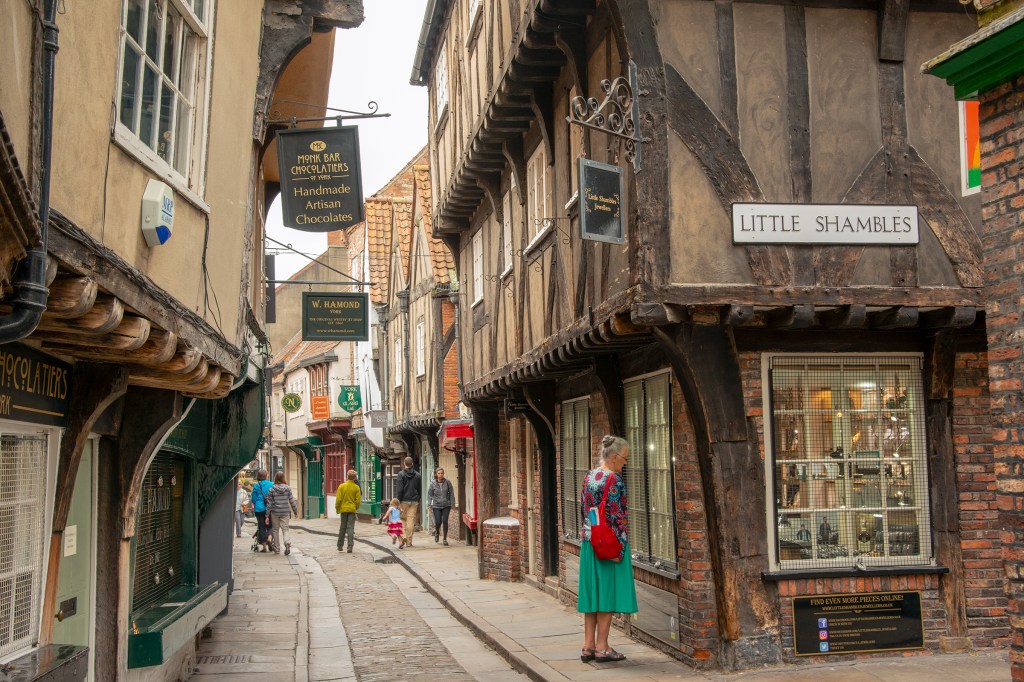
Intersection of Shambles and Little Shambles streets, York – Peter K Burian
Across Europe, the picture is even clearer. Inspired by the principles of sustainable urban design and climate action, many cities have made bold moves:
- In Oslo, the central zone has been completely pedestrianised. Since removing nearly all private vehicles from the city centre, Oslo has seen a drop in emissions, fewer road accidents, and a significant increase in footfall for local businesses.
- Ghent, in Belgium, redesigned its entire city centre to prioritise people, bikes and public transport. Traffic was rerouted, public squares were reclaimed, and now the city enjoys cleaner air, vibrant public life, and one of the highest quality-of-life ratings in Europe.
- In Madrid, a large-scale low-emission zone has pushed cars out of the historic centre in favour of clean transport and walkability. Local businesses saw an increase in visitors almost immediately.
- And in Ljubljana, Slovenia’s capital, a once car-dominated city centre has been fully pedestrianised. Today, it’s widely recognised as one of the most liveable cities in Europe with higher tourism, a flourishing café culture, and remarkably high resident satisfaction.
These aren’t isolated examples, they’re part of a clear global trend. Pedestrianisation projects like these consistently deliver:
- Cleaner air, more trees and public seating
- Improved safety, especially for children, the elderly, and those with disabilities
- Increased footfall and longer dwell time in shops and cafés
- More tourism and stronger cultural life
- Healthier, happier communities with pride in their city
Crucially, these schemes are not experimental, they are proven. No city-wide pedestrianisation project of this kind has ever been a failure. The outcomes speak for themselves: thriving local economies, more sustainable transport, and cities that are made for people.
Nottingham is more than capable of joining them and even leading the way in the UK. The success stories already unfolding in Old Market Square, Hockley, Sneinton Market and Broad Marsh show we know how to do this. Now is the time to take the next step.
💡 HOW IT COULD WORK
Turning King Street and Queen Street into pedestrian-friendly spaces is not only possible, it’s practical. Nottingham has already led successful transformations across the city, from Old Market Square to the Broad Marsh area. These projects show that with smart, flexible planning, it’s entirely achievable. We simply need to apply that same approach here, creating streets that serve residents, workers, visitors, businesses, and emergency services alike.
What follows are just some early ideas we’ve considered to help make the project practical and coherent. Nothing is set in stone. Final plans will be developed in collaboration with professionals from all relevant fields, and of course, in consultation with the council.
🚌 A manageable bus reroute for a better City Centre
Yes, rerouting buses is part of the plan and we know it can work. Every time King and Queen Street are closed for roadworks, events, or other disruptions, buses are diverted with no major issues. These regular temporary changes prove that the network is flexible. And this isn’t new for Nottingham: when Old Market Square was pedestrianised, buses that used to pass through were successfully rerouted. We’ve done it before and we can do it again.
🚑 Emergency routes always clear
Pedestrianisation doesn’t mean banning all vehicles, it means managing them smarter. Access for emergency and specialised vehicles can be maintained through retractable or key-controlled bollards, just like in other pedestrian zones. Bin trucks, maintenance crews, and other essential services could be given timed access through nearby side streets or designated loading windows. Street layouts would be designed with emergency access in mind: terraces, planters, and seating arranged to maintain a clear central route at all times.
🚚 Smart delivery solutions
Deliveries are vital for local businesses and can still happen, just earlier in the day. Scheduled delivery windows in the early morning, before pedestrian hours begin, are already working in other parts of Nottingham. Controlled access through retractable bollards would allow vehicles in during designated times, while keeping the area car-free during the day when footfall is highest. Restaurants, shops, and service providers could all plan around these windows easily.
♿ Inclusive design with disabled access
Accessibility is essential. The goal will be to identify a convenient and practical nearby location for accessible disabled bays and dedicated blue badge drop-off points, to ensure people of all abilities can easily reach local shops and services. This could be in areas where outdoor seating is less needed, such as the top of Queen Street, which primarily features retail shops rather than restaurants or bars.
🚕 Taxis Still Welcome
Taxis are crucial for people with mobility needs, for late-night journeys, and for those carrying heavy bags or shopping. They can still be part of this plan. Dedicated taxi ranks could be located just outside the pedestrian zone for example. Well-marked signs and digital mapping (such as Google Maps or ride-hailing apps) could guide passengers to nearby ranks. We could also introduce dual-use bays just off Queen Street, shared by taxis, blue badge holders, and mobility services, maintaining access without disrupting the pedestrian character of the area.
🚲 Secure Cycle Parking
The top of Queen Street or the bottom of King Street could also provide space for more secure, clearly marked cycle parking, supporting sustainable travel and encouraging more people to visit the area by bike.
🛵 Practical Measures for Delivery Drivers
To ensure food delivery services can continue operating smoothly without disrupting public space, Nottingham City Council must take active steps to address the unmanaged presence of delivery drivers like creating designated short-stay bays on nearby streets, allowing fast, legal pick-ups without blocking pavements or traffic. We also recommend working with platforms like Uber Eats and Deliveroo to geofence the new pedestrian zone, so drivers aren’t routed into restricted areas. Encouraging the use of e-bikes and low-emission scooters—quieter, cleaner, and better suited to walkable environments would further reduce impact. Finally, better coordination with local restaurants can help improve communication with drivers and reduce the clustering, obstruction, and noise that currently affect the area.
🏘️ Supporting Local Businesses
This plan isn’t about restricting businesses, it’s about helping them thrive. It includes clear communication and ongoing consultation with local business owners, as well as marketing support and updated signage to help guide customers during the transition. Outdoor terraces would give cafés and restaurants more space, increasing both seating capacity and visibility. There would also be opportunities for businesses to collaborate on cultural events, street activities, and promotions that bring people into the area. With less traffic and more welcoming streets, local businesses would benefit from greater footfall, longer visits, and increased visibility.
🌳 Designing a Street That Works for Everyone
The streetscape would be thoughtfully redesigned to create a smooth, level surface from building to building, much like the successful transformation of Old Market Square. High-quality, durable paving would be combined with well-placed seating areas, trees, tasteful lighting, and generous space for outdoor terraces, turning King and Queen Street into places where people genuinely want to linger and enjoy. The design could also incorporate thoughtful features such as step-free routes and wide walkways for wheelchairs and pushchairs, along with clearly designated seating, shaded spots, and quiet areas that provide sensory comfort for those who need it. Signage would go beyond practical navigation, offering historical and architectural interpretation through mini plaques, notes on key buildings, or links to nearby attractions. Elegant lighting, public art, and even small water features could further celebrate the streets’ heritage. The aim is not just to make the area accessible but to make it beautiful, inclusive, and full of life.
🚮 Waste Management & Cleanliness
More visitors means more foot traffic and more need for a clean, welcoming environment. Regular street cleaning, more public bins (including recycling), and well-managed waste collection will help the area stay attractive and functional. Regular street cleaning and pavement washing will be essential to keep the area attractive and safe, especially around café terraces and high-footfall zones. Businesses and the city can work together to maintain high standards and present the area at its best.
🤝 LET’S MAKE IT HAPPEN
We don’t need to reinvent the wheel. Nottingham already has the tools, experience, and evidence to make this work. With bold leadership and community support, we can create a city centre that’s cleaner, safer, more vibrant and built for people.
This is practical. This is achievable. This is how we build a better Nottingham.
 Make King & Queen's street pedestrian