
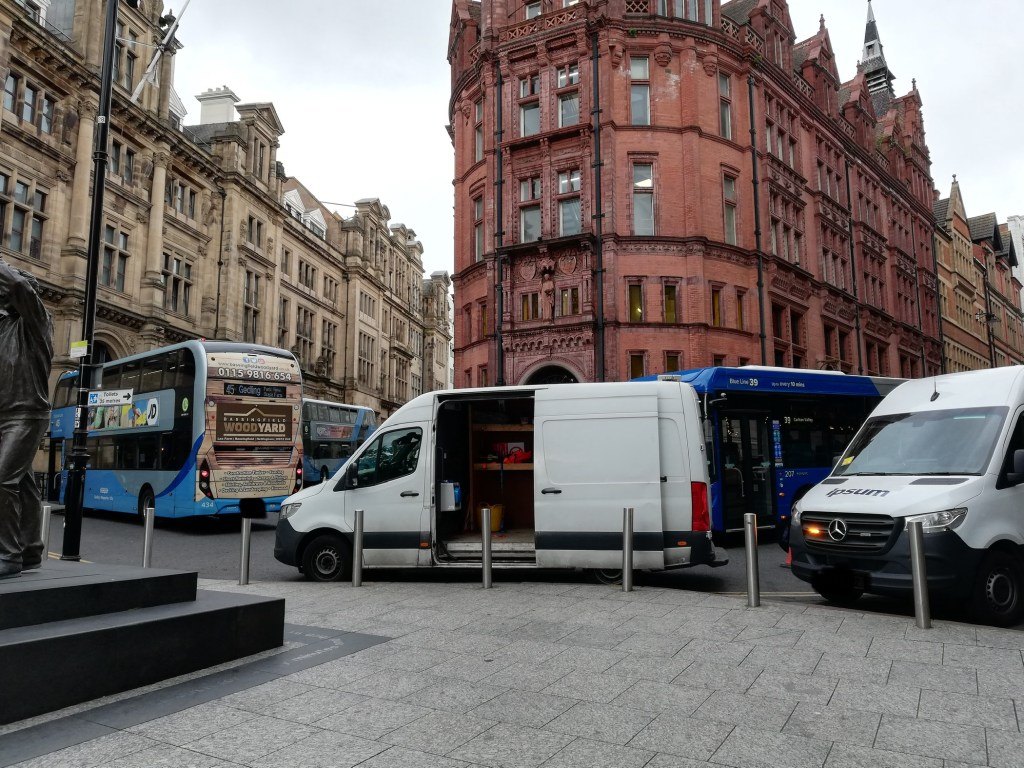
Traffic on King Street, Nottingham, 2025 (free to use)
King Street and Queen Street, two beautiful and historical streets in the heart of Nottingham, are currently overwhelmed by traffic, congestion, and tension. Despite their prime location, just steps from the Old Market Square, the Theatre Royal, and the Victoria Centre, these streets have become chaotic, uncomfortable and hostile, for workers, residents and visitors.
⚔️ A DAILY BATTLE WITH TRAFFIC
Every single day, vehicles get stuck behind buses, delivery vans and motorcycles parked along the street. It only takes one vehicle in the wrong place to cause a backup that reaches all the way to Upper Parliament Street, one of Nottingham’s busiest arteries. With more than ten restaurants and bars on King Street alone, there are just not enough delivery bays (only space for two cars or one van) to meet the demand. Very often, buses get stuck and have to wait for the way to clear, which disrupts their schedule, frustrates the drivers, and causes inconvenience for the passengers. Delivery drivers are forced to circle the block over and over, wasting time, fuel, and energy just to find a place to stop and delaying their delivery.
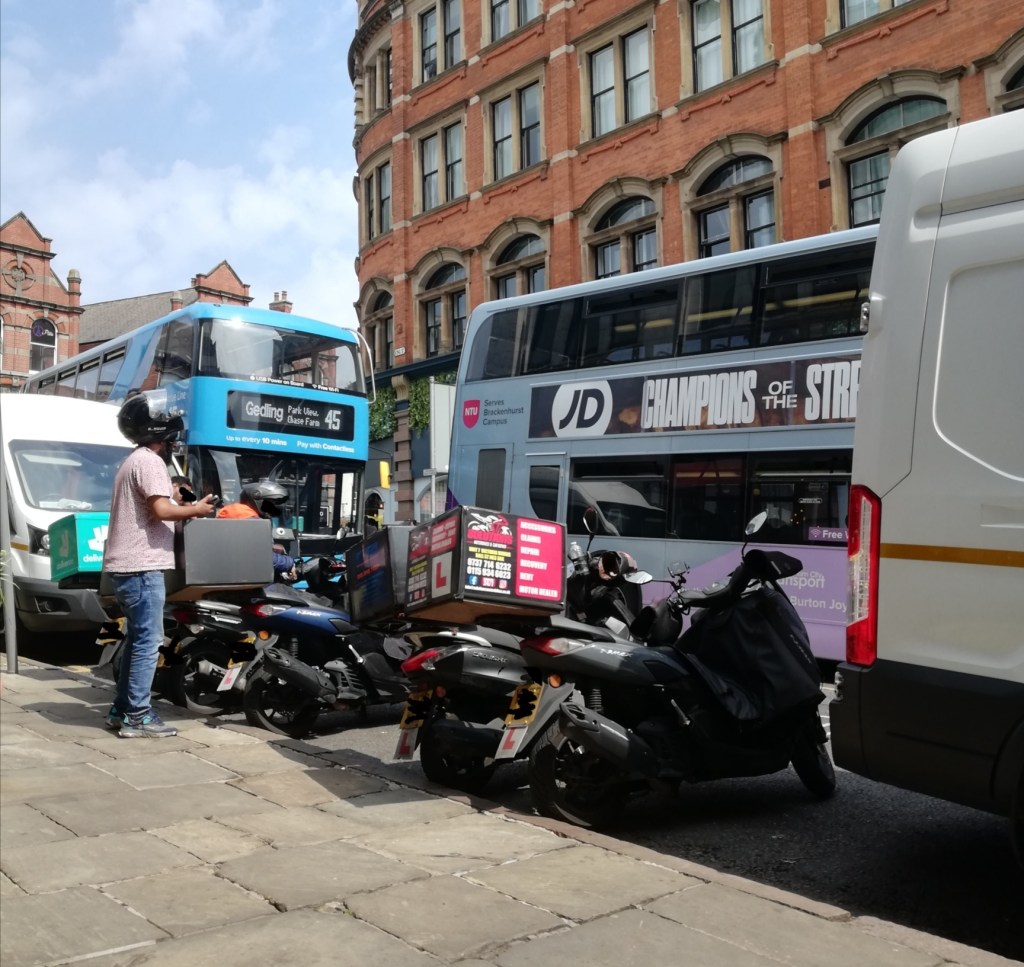
Traffic on King Street, Nottingham, 2025 (free to use)
Eventually, many just give up and park on the pavement, on disabled spaces or on double yellow lines risking to get a fine because they have no other choice to do their job. Takeaway delivery drivers compete for the same limited space, often getting told off or shouted at by bus drivers or traffic wardens just for trying to do their job. It’s not fair on anyone, and the pressure builds up fast.
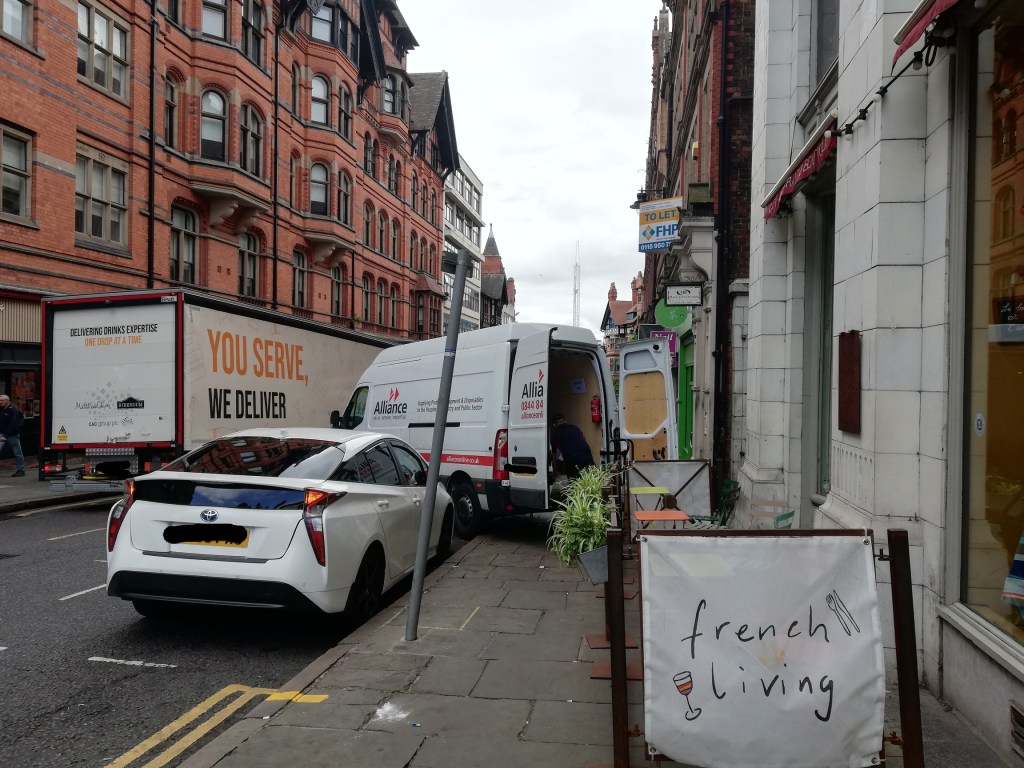
Parking on King Street, Nottingham, 2025 (free of use)
⚡ TENSION IN THE AIR
There’s a real sense of tension in these streets : arguments, honking, shouting, even fights are sadly not unusual. You feel it when you walk through, and you definitely hear it if you’re sitting in a restaurant, living or working nearby. On warm days, when businesses try to open their windows or doors to get some fresh air, what comes in instead is the constant noise and fumes. Students living above the shops are regularly disturbed by noise, and some residents find it impossible to sleep with windows open. It is not the peaceful, welcoming city-centre vibe that people expect—or deserve.
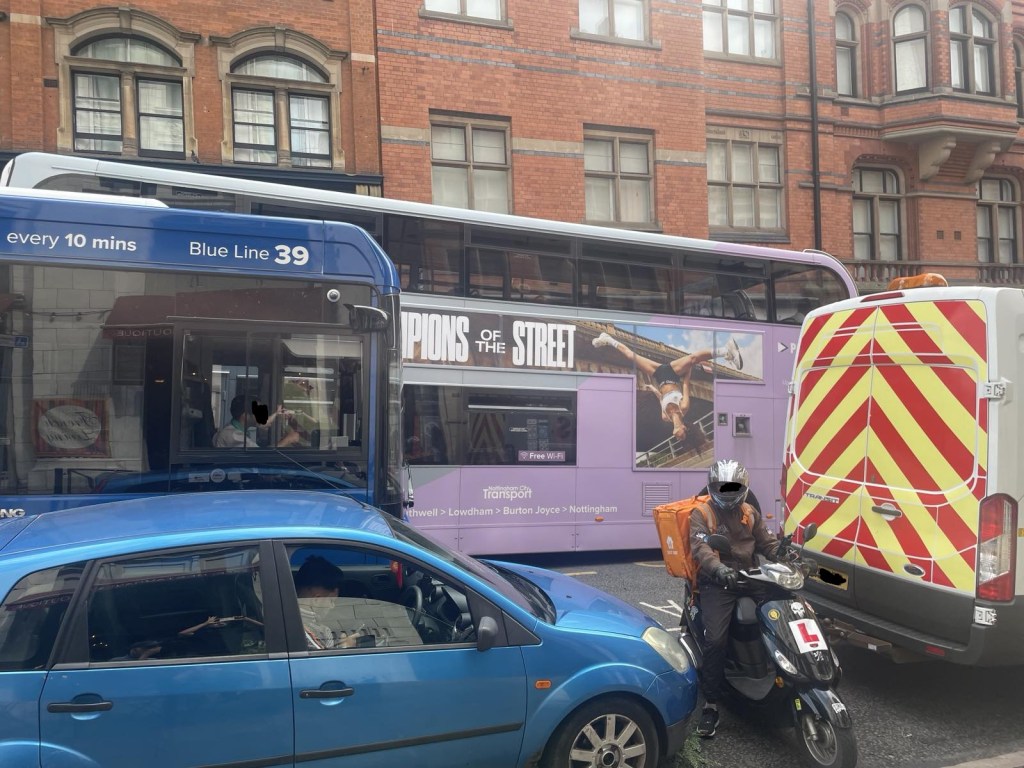
Traffic on King Street, Nottingham, 2025 (free to use)
🛵 TAKEAWAY DELIVERY DRIVERS : A GROWING CHALLENGE
In recent years, the rise of app-based food delivery services has brought a noticeable surge in takeaway drivers to Nottingham city centre. This shift has introduced new challenges, particularly on streets like King Street and Queen Street, where narrow pavements and busy roads were never designed to accommodate so many vehicles and riders.
Currently, there are no designated waiting areas or collection bays for takeaway drivers in the city centre. With over ten restaurants located on King Street and Queen Street alone, drivers are frequently drawn to the area, not just to pick up orders, but also to idle between deliveries, often for extended periods. In the absence of regulation or proper infrastructure, many use the space in ways that create friction with other users :
- Parking cars, scooters, and motorbikes in delivery bays, bus stops, or even on pavements, often leaving engines running
- Gathering in groups on steps, pavements, or in front of restaurants, sometimes occupying outdoor seating meant for customers
- Blocking walkways with bikes and scooters, creating obstacles for pedestrians, wheelchair users, and families with pushchairs
- Littering, often leaving food packaging behind
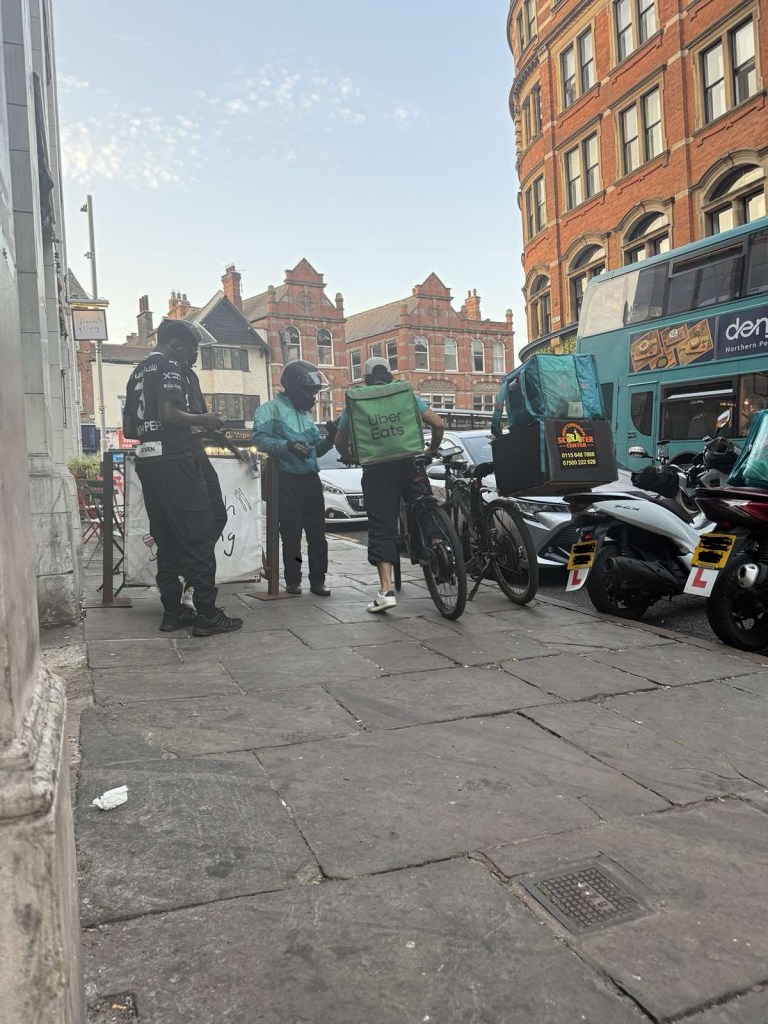
Drivers idling, King street, Nottingham, 2025 (free to use)
These behaviours lead to blocked pavements, engine fumes, litter, noise, and a sense of overcrowding, which negatively affects the pedestrian experience and creates tension with businesses, public transport, wardens and passersby. Engine idling contributes to poor air quality, while shouting, honking, and scooter alarms add to a generally chaotic atmosphere. Although most drivers are simply trying to do their jobs, the lack of dedicated space or management creates unnecessary conflict.
This is not unique to Nottingham. Across the UK, residents and business owners have raised concerns about delivery drivers “taking over public space,” “blocking pavements,” and “creating a hostile atmosphere.” These are not isolated incidents, they are symptoms of a system that lacks proper oversight, placing the burden on public space while the platforms that profit from these services take no responsibility for the consequences.
⚠️ NOT CLEAN, NOT SAFE
On top of everything else, the area just doesn’t feel looked after. It’s noisy all day, the air smells of fumes, and litter builds up, especially from takeaway packaging and bin bags. The narrow pavement is hardly ever cleaned, and it’s often tricky to walk through. It is cluttered with bus stops, shop signs, take away drivers’ bikes, overflowing bins and awkwardly placed “loading only” post tilted or sticking out at head height (many have bumped into them, adding injury to inconvenience). People on bikes weave between pedestrians, and if you’re pushing a buggy or using a wheelchair, it’s even harder.
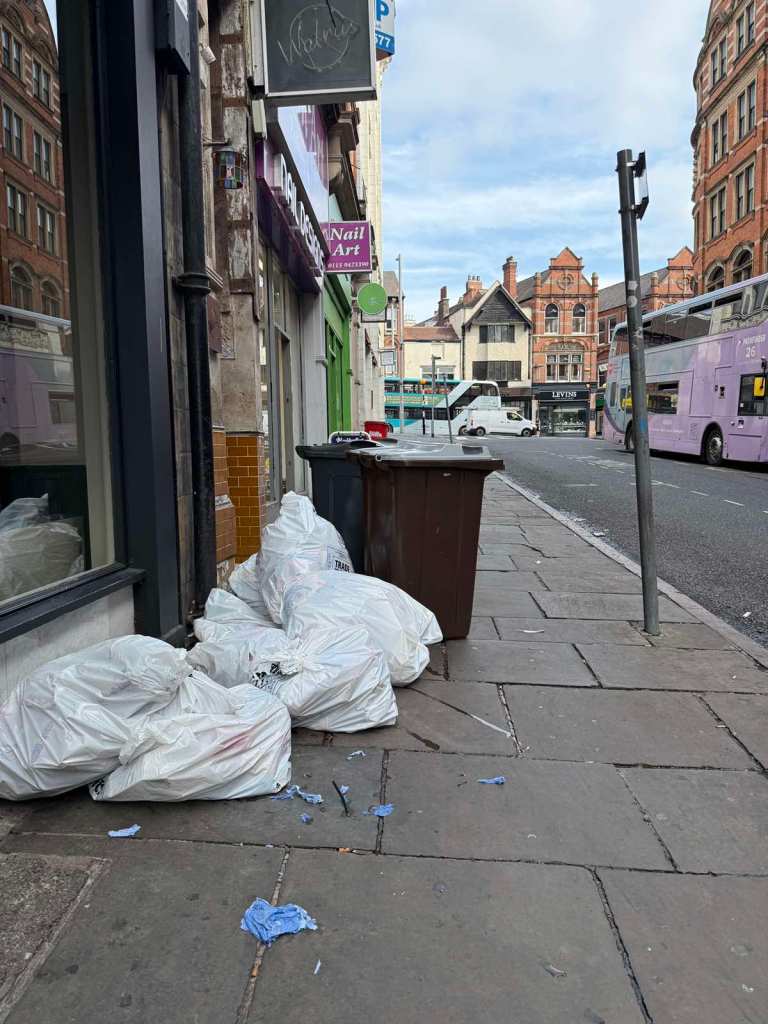
Bins on King street, Nottingham, 2025 (free to use)
Navigating these obstacles is frustrating during the day, and potentially dangerous. In the evenings, things get even more chaotic: Queen Street becomes congested with crowds queuing for Manhatta cocktail bar, mixing with passengers waiting for buses and making it impossible to walk through. At the same time, partygoers heading to or leaving Ink club spill out onto the road, putting themselves at risk and even causing buses to stop or swerve.
If something serious happens? An emergency vehicle would have a hard time getting through. There’s often no clear space either side of the road because buses are stopped on one side and vans are parked on the other.
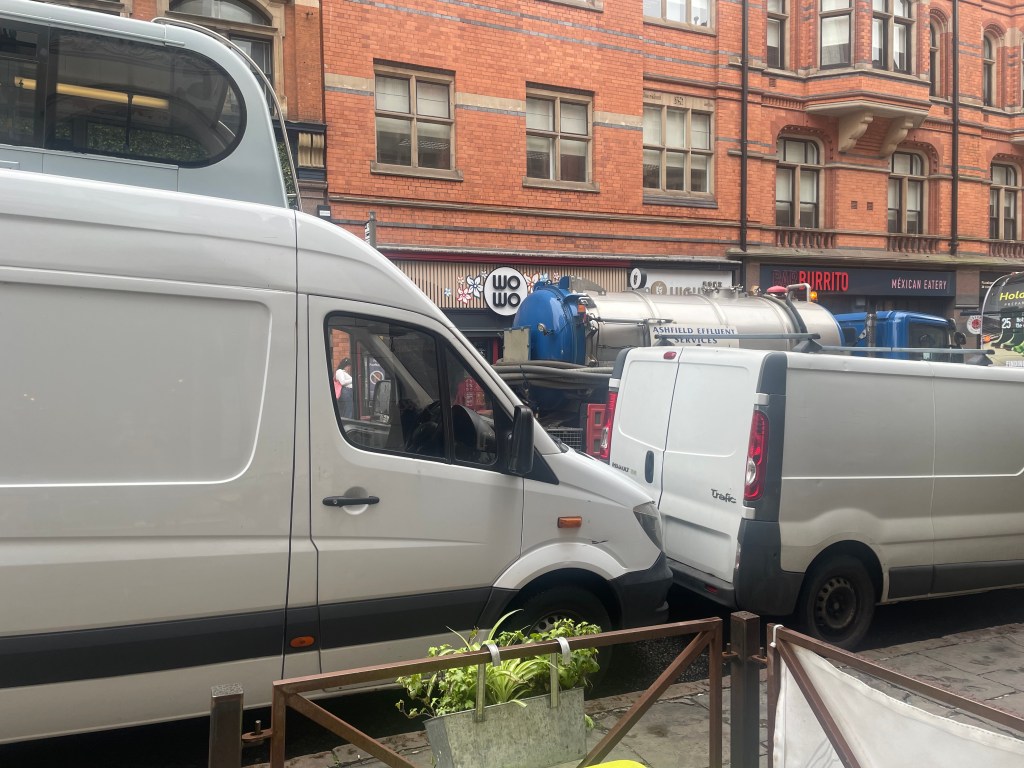
Traffic on King Street, Nottingham, 2025 (free to use)
The result is a daily tangle of vehicles and people, all squeezed into a space that doesn’t fit them, making it not only annoying and frustrating, but sometimes genuinely dangerous.
❌ TAXIS AVOIDING KING AND QUEEN STREET
Many residents and visitors report that some taxi companies, such as Uber, frequently refuse to pick up passengers on King Street and Queen Street. This is largely due to the risk of fines for stopping, confusing access restrictions (with many drivers assuming the area is bus-only with no stopping allowed), and a preference for easier pickup locations that avoid the constant congestion on these streets. As a result, King Street and Queen Street are becoming increasingly cut off from reliable taxi access, a “dead zone” for pickups, especially compared to nearby streets like Upper Parliament Street or Market Street.
This is a common and frustrating experience, particularly in the evenings or after shopping and dining, when many people are looking for a convenient way home. It is especially challenging for those with mobility issues, who may depend on taxis to collect them directly from these streets and cannot easily walk to alternative pickup points.
👀 INVISIBLE BUSINESSES
With all the visual clutter (tall buses, parked trucks, motorcycles) it’s hard to even see the restaurants, shops, and buildings architecture. Many Nottingham residents don’t even realise how many food and drink options are located on King and Queen Street. Some venues have been here for decades and still struggle for visibility.
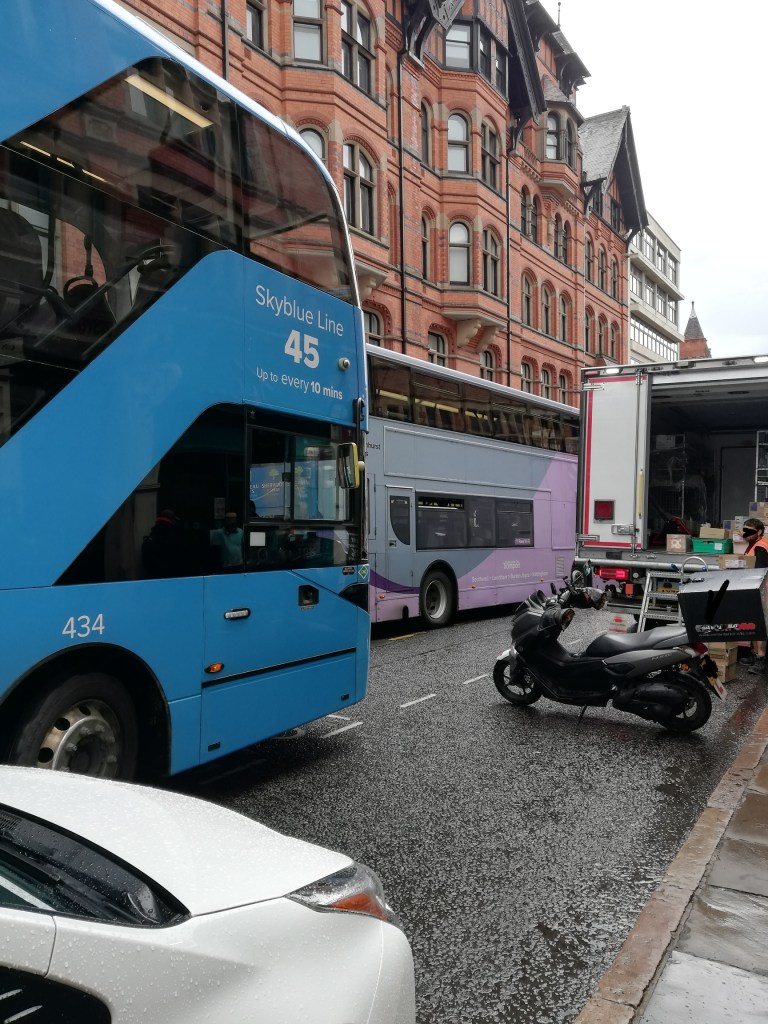
Traffic on King Street, Nottingham, 2025 (free to use)
The foot traffic on these streets is mostly people rushing from point A to B, or waiting in line for the bus. They are not looking up at shopfronts, they’re not stopping to explore, and they’re definitely not admiring the beautiful old buildings designed by some of Nottingham’s best historic architects. The streets feel more like a through-route than a destination. This affects businesses deeply. Many have closed within months of opening due to low footfall. Those still standing are fighting hard to survive.
🍽️ WHAT HAPPENED TO TERRACES ?
The idea of enjoying a drink or a meal on a sunny terrace sounds great, right? But that’s just not possible here. Some restaurants have tried, they’ve bought tables and chairs, applied for permission, and made the effort. But the reality is, the space they’re allowed is tiny, the pavements are narrow, squeezed between walls and bus lanes, and there’s barely room to walk past when people are queuing at the bus stops.
Customers who do sit outside find themselves just inches away from traffic. They’re stuck beside roaring bus engines, delivery vans blocking the view, and clouds of exhaust fumes. It’s not comfortable, it’s not relaxing, and it doesn’t feel safe. No one wants to eat lunch with their nose in a truck exhaust.
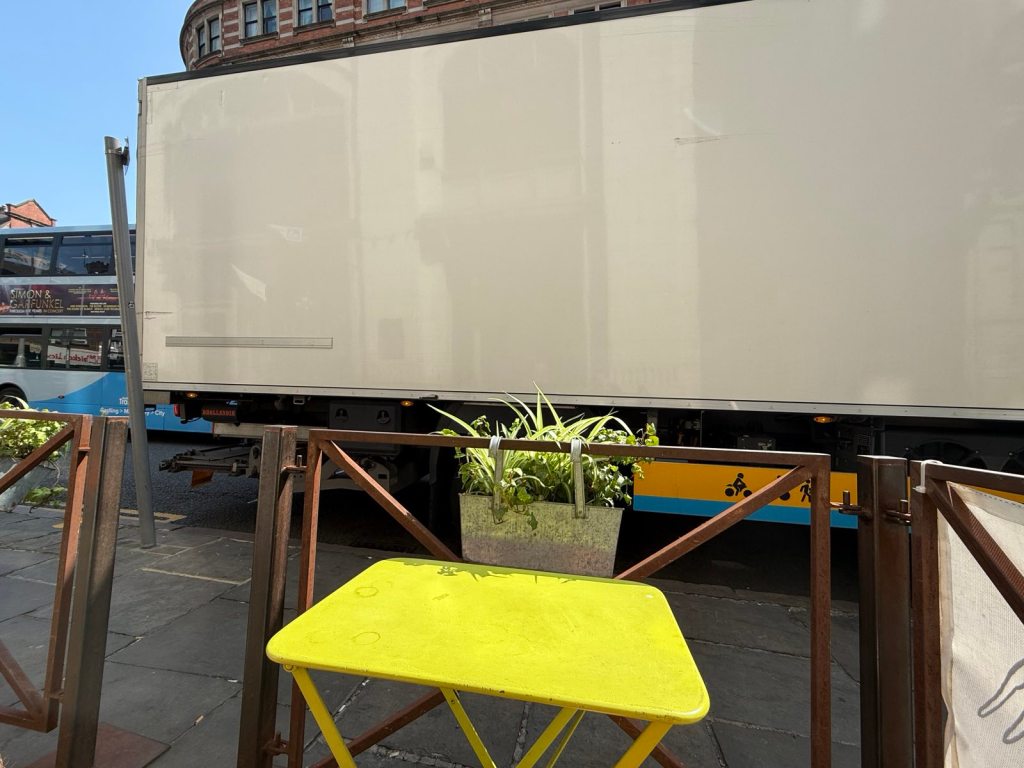
View from a terrace, King street, Nottingham, 2025 (free to use)
Because of that, most terraces go unused. Some businesses have packed theirs away into storage just a few months after buying them. Others leave a couple of tables out, not because they expect people to sit, but just so passersby can see they exist. And many have given up entirely, knowing there’s just no point. The few terraces that are still in place often end up being used by takeaway delivery drivers, who sit or eat there while waiting for their orders, sometimes leaving litter behind when these spaces are meant for customers and also serve as part of the restaurant’s image and identity.
💭 A WASTED OPPORTUNITY
What’s most frustrating is that this could all be so different.
This part of Nottingham should be vibrant, welcoming and buzzing with life, full of people enjoying food and drink, relaxing, admiring the buildings, stopping to chat or explore. They should feel like an extension of the Old Market Square, part of the same inviting pedestrian area that’s already there. With its central location, it has the potential to become a cultural and culinary hub—just like Hockley have managed to build a strong identity as food and culture hubs after it was pedestrianised. Instead, it feels like a forgotten corridor clogged with fumes and frustration and businesses are paying city-centre rents to operate in conditions that drive customers away.
Despite being home to a rich architectural heritage and long-standing local businesses, King and Queen Street are underused and overlooked. It’s not because they lack charm or potential, it’s because they are overwhelmed by traffic and tension and are completely lacking of space for people to stop, breathe, and enjoy.
 Make King & Queen's street pedestrian